
- SpotMV
- Dec 04, 2025
- latest updates
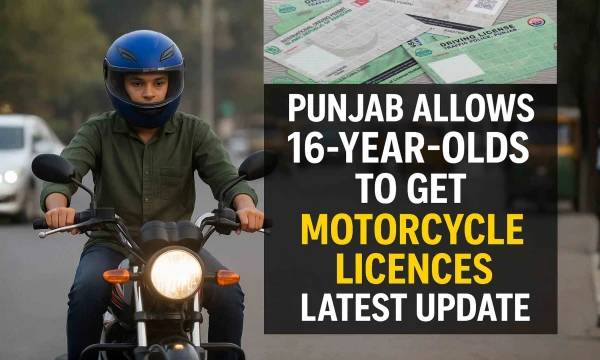
The provincial government of Punjab has declared that 16-year-old teenagers are now eligible to receive motorcycle driving licences and smart-cards.
The move follows extensive backlash against traffic crackdowns which led to arrests, booking under First Information Reports (FIRs), and even criminal records being opened against underage riders, many of whom were schoolchildren.
In the new structure, the first-time offenders, who are guilty of minor offenses like failure to use the helmets will not be fined or arrested as they will be warned first.
This policy change is to institutionalize and control youth riders on motorcycles instead of punishing them through crime.
Why the Change: Context and Rationale
Why there was the need to change the context and rational:
Previous Crackdown & Concerns
Traffic authorities in Punjab had just recently added the offenders of traffic to their hit-list: thousands of cases were registered, and many young riders, even school-going children, already had their FIRs and criminal records because of unlicensed riding or helmet non-use.
This resulted in a big amount of criticism by parents, activists and even courts. It was claimed that putting underage offenders under arrest because of committing a traffic offence would have a lasting implication on their future.
Balanced Approach — Licensing + Awareness Over Punishment
The new decision seems to overrule in favor of regulation, and social sensitivity on the part of the government:
-
The state recognizes that a lot of teens require a motorcycle mode of transportation by permitting 16 year-olds to seek licences (e.g. to attend school or college).
-
The government aims at not criminalising the youths in instances of first-time offenders by turning first helmet-violations into a warning at least among minors.
-
An awareness week in all provinces has also been commissioned, with specific focus on the students, to encourage road safety. There will be the first use of drone and body-cam surveillance when enforcing traffic.
Authorities have called on parents and guardians to become more actively involved in imparting the culture of helmets and illegal rides among the teens.
Broader Traffic Reforms — Tougher Enforcement + Hefty Fines
This change of licence age is among a broad range of traffic law reforms in Punjab. During the last weeks and months:
-
The provincial cabinet passed significant amendments in the ancient motor vehicle regulations, suggesting that fines should be greatly increased - there are quite a number of offences that attract a fine of as much as Rs 20,000.
-
With persistent offenders, they can now lose their cars through auction and seizure in case of repetition of offenses.
-
The crackdowns in recent times have been very strict: in just over 48 hours, traffic police are said to have fined a total of Rs70 million, with more than one thousand FIRs being reported against serious offenders.
-
Some of the most popular crimes that were punished included driving without license, failure to wear helmets, traffic offences, and overloading.
The choice to licence 16-year-olds, in this regard, seems to be an attempt at formalizing and controlling, but not criminalizing. It is hoped that by providing youthful riders with a legal route, the unlicensed and unregulated minor riders will reduce, and thus provide safer roads and reduced emergency arrests.
What It Means for Families, Young Riders, and Punjab Roads
The following is how this criteria change for every sector:
For Young Riders & Families
The teens who are already 16 years old and possess genuine smart-cards are now allowed by law to apply to licences of motorcycles- they no longer fear being apprehended by FIRs just because they choose to ride.
Minor cases of violating helmet rules will be issued with warnings and not penalties and criminal records, which is more humane and rehabilitative.
However, safety is prioritised: the state anticipates the riders, as well as the parents, to check the presence of the helmets and adherence to the other regulations.
For Road Safety & Governance
The change would lower the cases of unlicensed riders on the roads- this is a major cause of accidents particularly among the youth.
Together with heavier punishments on repeat offenders, and with the help of technology (drones, cameras), the policy is supposed to discipline and hold the Punjab road network accountable.
Also, road-safety, helmet-use, and lawful driving should also be cultivated by the use of public awareness programs targeting the students.
Potential Concerns & Challenges
The following are some potential concerns and challenges:
-
There is the possibility of some having issues with letting 16-year-olds ride because of maturity and the risk of road-safety among younger riders.
-
It will require strong licensing testing (theory and practical) and effective helmet enforcement and the traffic police surveillance.
-
Conventionality, community awareness, and adherence to the same by guardians will be key to the success of teaching safe riding habits.
Conclusion
The move by the Punjab government of permitting 16-year-old people to get motorcycle licences is a major change in policy. Instead of the youths being punished and leaving traces of criminal records, the new strategy provides legal acknowledgements, controls and an opportunity to formalise.
Together with tougher traffic legislation, greater penalty on habitual offenders, and a province wide initiative on road safety awareness, the measure attempts to balance the scales: granting the youthful riders their freedom and encouraging them to ride responsibly and minimize reckless behaviour on the roads.
To make this effort successful, it will be necessary to have cooperation, including a young rider, their families, traffic police and the general population. When put in place properly it can be a great way to enhance road safety, lower unlicensed riding, and save the lives of thousands of young people on the busy roads of Punjab.
Comments