

- SpotMV
- Feb 17, 2026
- Buying Guides
It is scary to look at the ABS light on your dashboard. Anti-lock Braking System (ABS) is one of the safety features that are very important as it stops the wheels from locking when the driver presses the pedal hard. When the ABS warning light is activated, it normally indicates that the system has detected a fault.
The good news? In many situations, it is possible to diagnose and even repair the problem without spending a lot of money. We will include this guide on how to switch off the ABS light, the reasons behind it, and the actions you can take today.
What Does the ABS Light Mean?
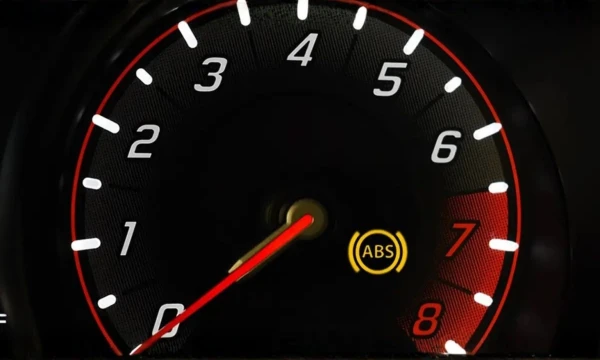
The ABS light will normally be a round circle in yellow or orange, with the letters ABS in the middle. When it stays on, it indicates:
-
The failure of the ABS system.
-
Defective sensor or electrical fault.
-
Low brake fluid levels
-
A problem with the ABS module
Notice: Under normal conditions, your normal braking system will continue to operate when the ABS light is activated; however, in this situation, the ABS will have no functionality.
Step 1: Restart Your Vehicle (Quick Reset)
The first step is to restart your car (Quick Reset).
This is because the ABS light sometimes comes on due to a glitch.
What to do:
-
Switch off your car.
-
Wait 5–10 minutes.
-
Restart the engine.
In case the light goes away, then it was probably a small sensor error.
Step 2: Check the Brake Fluid Level
One of the most frequent causes of the ABS warning light is low brake fluid.
How to check:
-
Open the hood.
-
Find the reservoir of brake fluid (it is typically found next to the firewall).
-
Make sure the fluid is in between the MIN and the MAX lines.
If it’s low:
-
Add the suggested brake fluid (be sure to use it whether you are in the manual or not).
-
If the light goes off after refilling, it might be due to a fluid-related issue.
Step 3: Inspect ABS Wheel Speed Sensors
ABS systems rely on wheel-speed sensors. The ABS light may be triggered by dirt, debris, or damage.
Signs of sensor issues:
-
The ABS light stays on all the time.
-
Speedometer fluctuations
-
During braking, there is grinding noise.
Basic inspection:
Look at the wiring and see whether it is visible.
Search around sensor areas regarding dirt accumulation.
The issue can also be solved by cleaning the sensors using brake cleaner.
Step 4: Scan for Error Codes (OBD-II Scanner)
It will require an OBD-II scanner in case the light is on.
Steps:
-
Connect the scanner to your car's OBD port (usually under the dashboard).
-
Read the error codes.
-
Determine the ABS fault code.
-
Select the codes with the scanner.
The code can be cleared, which will cause the ABS light to be off, in case the issue is relatively minor (such as a transient sensor error).
But, when the light is back, it is probable that the matter will need mending.
Step 5: Check ABS Fuse
The warning light can be activated by a blown ABS fuse.
How to check:
-
Identify the fuse box of your vehicle (see owner's manual).
-
Identify the ABS fuse.
-
Inspect and replace if blown.
Replacing the fuse is cheap and could resolve the problem immediately.
Step 6: Battery & Electrical System Check
The ABS light may also come on when the battery voltage is low.
-
Test whether your battery is weak.
-
Clean and ensure the battery terminals are properly connected.
In some cases, a battery removal of 10-15 minutes can resolve minor electrical faults (this can also reset radio settings and the clock).
When You Should NOT Ignore the ABS Light
Some are minor, whereas others require a professional response.
Seek a mechanic if:
-
The brake warning light is in combination with the ABS light.
-
There is an unnatural braking event.
-
The control pedal is spongy.
-
The light remains illuminated following the troubleshooting.
Using the ABS system with faults makes driving on slippery roads risky.
Can You Drive With the ABS Light On?
Yes, but cautiously.
Your standard brakes are still active, though:
- ABS is prone to malfunction in emergency stops.
- Hard braking may result in loss of steering control.
- One should solve the problem as fast as possible.
Estimated Repair Costs
Here’s what typical ABS-related repairs may cost:
Estimated Repair Costs (PKR)
|
Problem |
Estimated Cost (PKR) |
|
Wheel speed sensor replacement |
PKR 28,000 – 85,000 |
|
ABS fuse replacement |
PKR 2,800 – 8,500 |
|
Brake fluid refill |
PKR 5,500 – 14,000 |
|
ABS module repair/replacement |
PKR 85,000 – 280,000+ |
Note: Prices may vary depending on vehicle model, parts availability, and labor charges in your city.
Final Thoughts
The ability to turn off the ABS light will save you time and money. The problem can be eliminated in most instances with simple solutions such as checking the brake fluid, inspecting the sensors, resetting the system, and replacing the fuses.
But if the warning persists, do not disregard it. The ABS system is one of the major safety elements that can be used, particularly during wet or emergency braking.
Acting quickly also ensures your car is secure and on the road.
FAQs
1. Is it possible to turn off the ABS light and leave the issue?
A scanner can be used to clear the code, and in case the problem is not fixed, the light will restart.
2. Does the removal of the battery switch off the ABS light?
It can possibly restart the system, although it will not correct systemic errors.
3. Are ABS problems costly to repair?
Minor problems, such as sensor or fuse problems, are cheap. Significant repairs of modules may be expensive.
4. What will happen when I disregard the ABS light?
This could result in your car losing anti-lock braking, so that when you suddenly stop, you are at risk.
Comments