
- SpotMV
- Jan 17, 2026
- latest updates
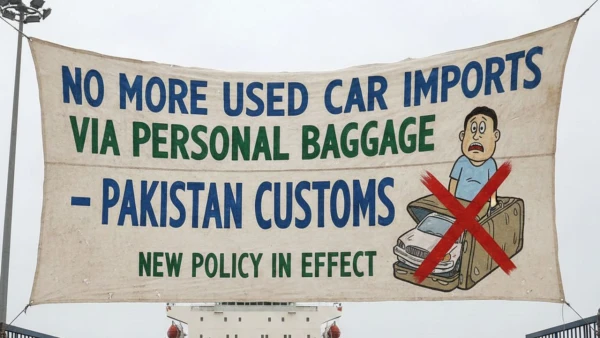
The federal government of Pakistan has radically altered the manner in which used cars may be imported into the country by other countries and the country has done away with a longstanding route of importation and has developed stricter terms to prevent misuse and defend the local industry. A new statutory regulatory order by the Ministry of Commerce has abolished the much-publicized personal baggage scheme in which most expatriates imported second-hand cars into Pakistan.
In the past, the Pakistani import policy had provided various platforms for importing used cars into the country, one of which was the personal baggage category. This system was able to send back Pakistanis to bring vehicles along with them after spending time in foreign countries. But authorities and industry sources would time and again criticize the scheme as a means of perpetual imports and resales at a low rate, compromising the asset of regulatory principles and injuring the local assemblers.
What Has Changed?
According to the updated policy, which was formalized by SRO 61(1)/2026, the importation of used cars is only legalized in two distinct ways:
-
Gift Scheme: Gift imports can be made of used vehicles by a Pakistani in a foreign country to a relative or friend in Pakistan.
-
Transfer of Residence (TOR): Cars can be imported in the situation when a Pakistani national is coming back to the country permanently.
Every mention of the personal baggage scheme has been eliminated in the Import Policy Order 2022 by the Ministry of Commerce and it has practically closed this import option. According to the authorities, this will assist in sealing some of the loopholes that enabled vehicles to get into the country severally without much scrutiny.
New Limits to Prevent Misuse
Besides the idea of scrapping personal baggage imports, the new policy also comes into force with a number of significant conditions that can be meant to put the control in the tightest way possible:
-
Non-transferability during One Year: Cars that are imported using a gift or TOR should remain under the name of the original importer at least one year before the sale or transfer of the cars. This is meant to prevent quick resale which was very prevalent in the previous system.
-
Import Period Extension: The maximum amount of days to which a vehicle can be imported under such schemes has gone up to 850 days as compared to 700 days that existed prior to the declaration of the previous import.
-
Condition of Country of Residence: In the case of transfer of residence scheme the transfer of residence must occur through the same country which the overseas Pakistani was staying in and not according to the third country sourcing of cheap cars.
-
Safety and Environmental Standards: All imported used cars would have to pass minimum safety and environmental standards that are comparable to those used when importing commercial vehicles, an action that the authorities believe would enhance the road safety and minimize environmental effects.
Industry and Expat Reactions
This policy change has had mixed responses. Other proponents of the automobile industry and local manufacturers have been happy with the changes citing that unchecked imports of used-vehicles were causing harm to local assembly and parts manufacturing. They claim that new rules will assist in promoting local investment as well as competitiveness in the industry.
In the meantime, the community of interested parties in the used-car importation business and most expatriates in Pakistan have been worried that with the elimination of the personal baggage route, the quantity of imported cars may go down and personal choices of bringing their car home will be curtailed.
The opponents also caution that the imported car demand might force the purchasers into the informal system or increase the domestic market prices.
Looking Ahead
The revised import policy is a definite effort of the government to strike a balance between facilitation of real returning Pakistanis and more regulation. With the enforcement that will take effect in 2026, the industry players and foreign communities will be keen to determine how the reforms will impact the imports of cars and the automotive industry in general in Pakistan.
Comments 0
Share your thoughts with other readers. Let us keep the discussion respectful.