
- SpotMV
- Mar 07, 2026
- latest updates
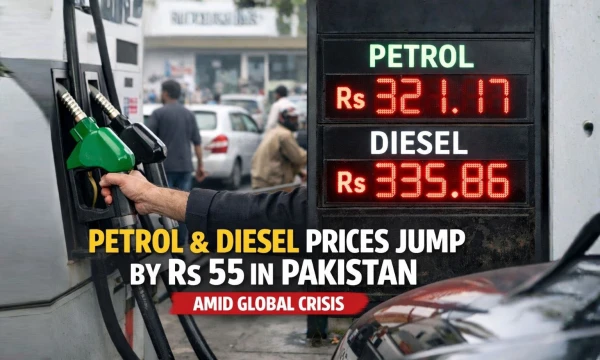
Another great fuel price shock arose when Pakistanis awoke to the news that the government would raise massively petrol and high-speed diesel by Rs55 per litre, which is to take effect on March 7, 2026. The drastic rise is in the face of the increasing oil prices in the world that have been triggered by the current oil crisis in the Middle East that has shaken up the world energy markets.
Such an abrupt increase in the price of fuel will affect transportation expenses, the inflation rate, and the cost of living, in general, within the nation.
New Petrol and Diesel Prices in Pakistan
The new fuel prices in accordance with the official announcement are as follows:
|
Commodity |
Old Price (Rs) |
New Price (Rs) |
Increase |
|
Petrol |
266.17 |
321.17 |
+55 |
|
Diesel |
280.86 |
335.86 |
+55 |
In this change, petrol has gone up to Rs321.17 per litre, and high-speed diesel is now up by a massive mark of Rs335.86 per litre, which is one of the biggest increases in fuel prices in recent months.
Why Fuel Prices Increased
The government pointed at the volatility of the oil market in the world as the major cause of such a sudden rise. The current unrests in the Middle East region have not only caused the supply routes of crude oil to be marred but also brought the international oil prices very high.
Due to the fact that a major percentage of its petroleum products are imported, any fluctuation in the world oil prices will immediately translate to the domestic fuel rates.
Authorities also pointed out that the rise has also been caused by the fluctuations in exchange rates and rising freight expenses.
Impact on Inflation and Transport
Analysts fear that the cost increment may cause a ripple effect in various sectors of the economy. When the fuel prices are high, costs of the transport are generally high and may drive the prices of the basic commodities like food, vegetables, and consumer products.
The cost of public transport and freight charges can also be increased in the days ahead since transporters will adapt to the new fuel prices.
The extra fuel cost might make everyday commuting and logistics even more costly to many of the households already facing increasing inflation.
Public Reaction
The news has generated a lot of buzz on social media platforms with most citizens complaining about the increasing cost of living. Among the people that are expected to be greatly affected are commuters, ride-hailing drivers, and owners of small businesses.
Economic analysts affirm that with the prices of oil in the world market not stabilizing, the local fuel prices cannot be discounted in the near future.
Conclusion
Increase of petrol and diesel to Rs55 per litre is a key aspect in the development of the fuel market in Pakistan. With the ever-growing energy tensions in the world, there is a high likelihood of the government being pressured to determine the balance between economic stability and rising import prices.
In the meantime, both the consumers and businesses will have to adapt to the new fuel rates from March 7, 2026 when it is likely to affect transportation, inflation, and general economic activity in the country.
Comments