

- SpotMV
- Sep 03, 2026
- Buying Guides
The first thing worth understanding is that a car shipping quote is not a price. It is a bid. You are not buying a seat on a scheduled service the way you buy a plane ticket — you are posting a job and waiting for a driver who is already running that route to decide your car is worth picking up. Almost every complaint people have about auto transport, from the quote that changed to the truck that never came, traces back to not knowing that.
Here is the short version before the details. Coast to coast on an open truck runs roughly $1,000 to $1,700, enclosed adds 30 to 60 percent, the driving takes about seven to ten days, and the waiting for a truck to be assigned often takes longer than the driving does. Book two to three weeks out, give a flexible pickup window, and check the carrier's federal safety record before the car goes on the ramp.
What It Actually Costs
Most people assume the price is distance times some rate. Longer trip, proportionally bigger bill.
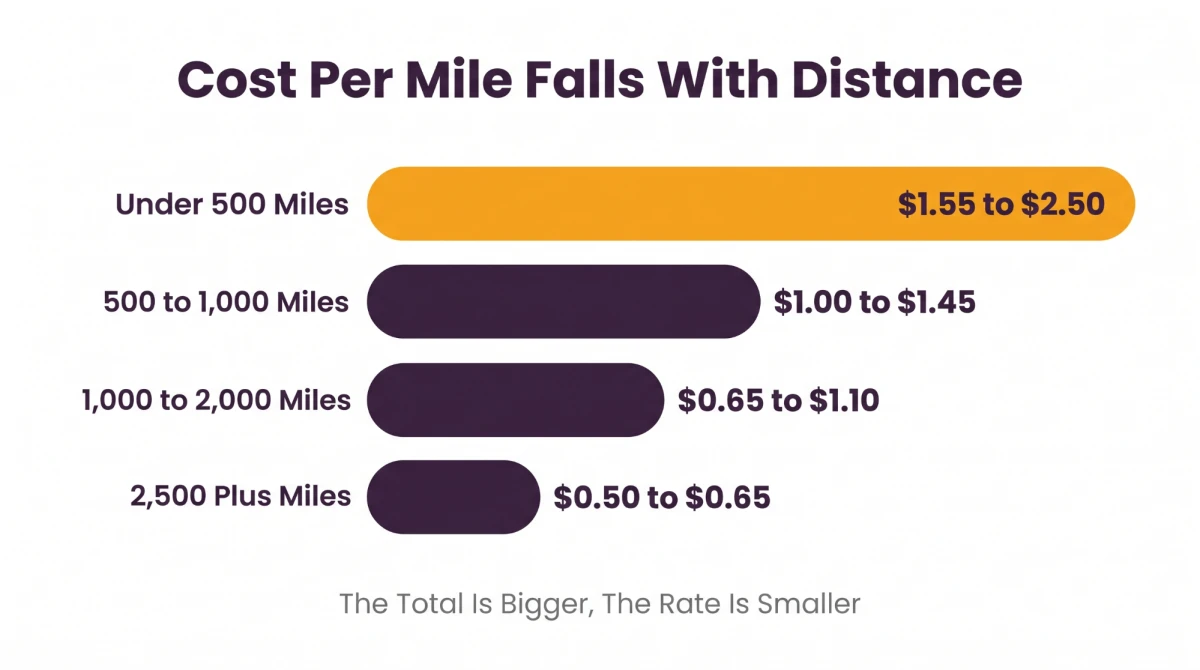
The rate per mile actually falls as the distance grows. Short moves under 500 miles run somewhere around $1.55 to $2.50 a mile, because the truck still has to be dispatched, loaded and unloaded regardless of how far it goes. Stretch that to 2,500 miles and the rate drops to roughly $0.50 to $0.65. The total is bigger but the rate is much smaller, which is why an 800 mile move can feel expensive next to a cross country one.
Three things move the number more than anything else. The first is the route. Dense corridors — Los Angeles to Dallas, Chicago to Atlanta, anything running up and down I-95 — are cheap per mile because trucks run them constantly and a driver can fill a trailer in a day. Thin lanes into rural areas cost more because somebody has to drive empty to reach you, and empty miles are the most expensive miles in trucking.
The second is timing. January and the summer months are peak nationally. The Florida lanes are their own weather system, roughly doubling in the fall when everybody moves south and again in spring when they all come back.
The third is fuel, which sets the floor under everything. A loaded car hauler manages five or six miles per gallon, so a cross country round trip burns through a serious amount of diesel before the driver has earned anything.
How Long It Takes
People think of transit time as the drive. It mostly isn't.
Once your car is physically on a truck, cross country is about seven to ten days, and shorter regional runs are three to six. That part is fairly predictable. What is not predictable is how long the car sits waiting for a truck to claim it, and that depends entirely on whether the price posted is attractive relative to the lane.
This is where the cheap quote does its damage. A price set to win your booking rather than to move your car simply sits on the load board while better paying freight gets taken first. You are not being ignored.. you are being outbid, every day, by other people's cars.
The single cheapest thing you can do to speed it up is to be flexible on the pickup date. Giving a carrier a three to five day window instead of one specific morning lets your car fill a gap somebody else's schedule left open, and that flexibility is worth real money.
Open or Enclosed
The assumption is that enclosed transport is the luxury option — the same service, wrapped in a nicer box.
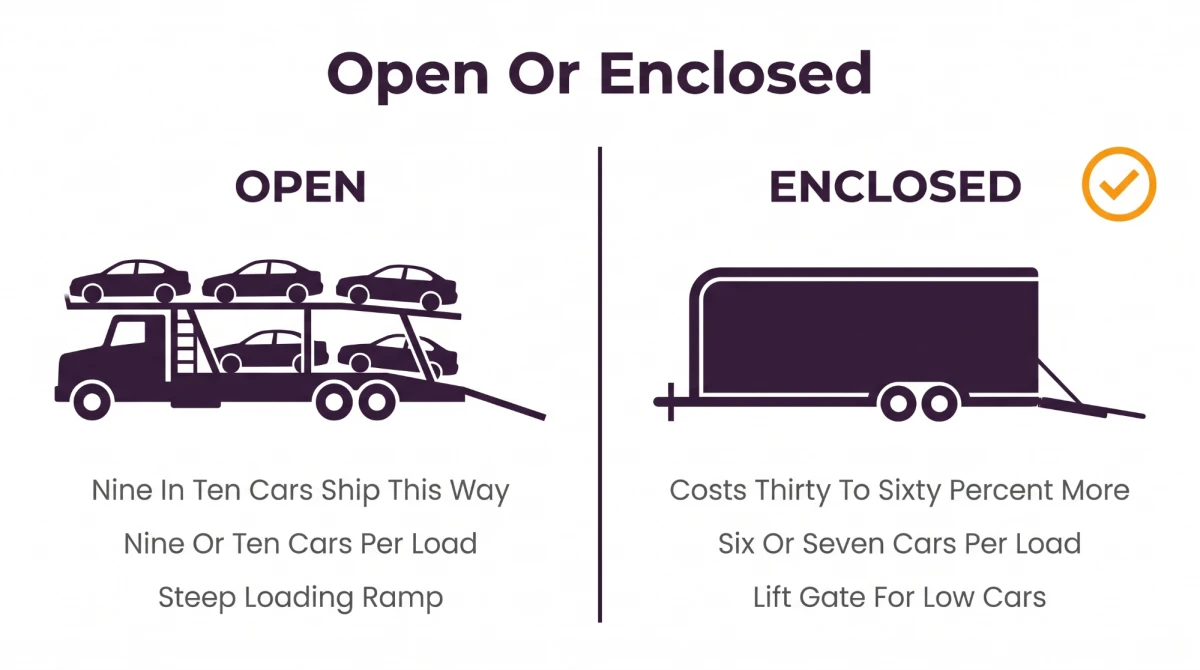
The real differences are equipment and clearance. Around nine out of ten cars in the US move on open trailers, which is genuinely fine for a normal car; they are the same trailers manufacturers use to deliver new vehicles to dealerships. What you accept is weather, road grime and stone chips over a few thousand miles.
Enclosed auto transport matters most for cars that physically cannot load onto an open trailer. A standard open hauler loads up a ramp at an angle that will drag the nose or exhaust of anything sitting under about five inches of clearance. Enclosed rigs typically carry a hydraulic lift gate that raises the car flat instead, plus soft straps that wrap the tires rather than hooking the suspension. If the car is low, or valuable enough that stone chips are a real bill, that equipment is the reason to pay more — not the walls.
One tradeoff to know: enclosed trailers carry six or seven cars against nine or ten on an open one, and there are far fewer of them on the road. Fewer trucks means less flexibility on dates.
Door to Door or Terminal
Book door to door and most people picture the truck outside the house with the ramp down.
A loaded car hauler is 75 to 80 feet long and needs room to turn, room to drop the ramp and clearance overhead. Low branches, tight cul de sacs, gated communities with height bars, narrow streets with cars parked both sides — any of those and the rig physically cannot get in.
So door to door auto transport means as close to your address as the truck can safely and legally get, which is often a nearby shopping center or a wide commercial lot a few minutes away. The driver calls ahead and arranges it, usually the day before.
Terminal service is the alternative: you drop the car at a yard and collect it from another. It is normally cheaper and almost always less convenient, because you have to get yourself to and from two industrial parks and the car sits in a lot in between.
Worth doing before you book: look at your street on satellite view and find the nearest large lot. Two minutes of that prevents a confused phone call on delivery day.
Who You Are Actually Hiring
Most people believe they are hiring a trucking company. You call a name you found online, pay a deposit, and picture that company's truck arriving.
Most of those names are brokers. They dont own trailers. What they own is access to a load board where thousands of owner operators are looking for freight that fits the route they are already driving. That isnt a scam — it is how essentially the entire industry moves — but it explains why quotes vary so widely and why a low one can sit for weeks. A broker with real carrier relationships, like Rivalane Auto Transport, puts your car in front of the drivers who actually run that lane and prices it to what will get claimed rather than to what sounds good on the phone.
Whoever you book through, the carrier is the company whose truck shows up, and that is the one worth checking. Every legitimate interstate carrier has a USDOT and MC number, and you can run either through a free federal carrier lookup to confirm the operating authority is active and see the safety record. It takes two minutes, it costs nothing, and it is the single highest value check available to you.
Insurance and the One Document That Matters
The paperwork at pickup looks like a formality.. It's the opposite.
Every legitimate carrier carries liability and cargo insurance. Cargo limits commonly sit between $100,000 and $250,000 per load, which matters when there are nine cars on the trailer sharing it. Ask what the cargo limit is and whether the deductible applies per vehicle or per load.
And know that your own auto policy generally does not cover the car while it is on a truck — the carrier's cargo policy is what is in force.
The Bill of Lading is the document that decides who pays if something is wrong. At pickup the driver walks the car and marks existing damage on it. At delivery you do the same before you sign anything. Damage that wasn't noted at pickup but is noted at delivery is your case. A clean signature followed by a phone call two days later usually isn't.
Photograph the car yourself at both ends, in daylight, including the wheels and the lower panels. Three minutes of that is worth more than any argument afterward.
Preparing the Car
Wash it before pickup. Not for appearance — a clean car makes existing scratches visible, which is exactly what you want documented on that inspection form.
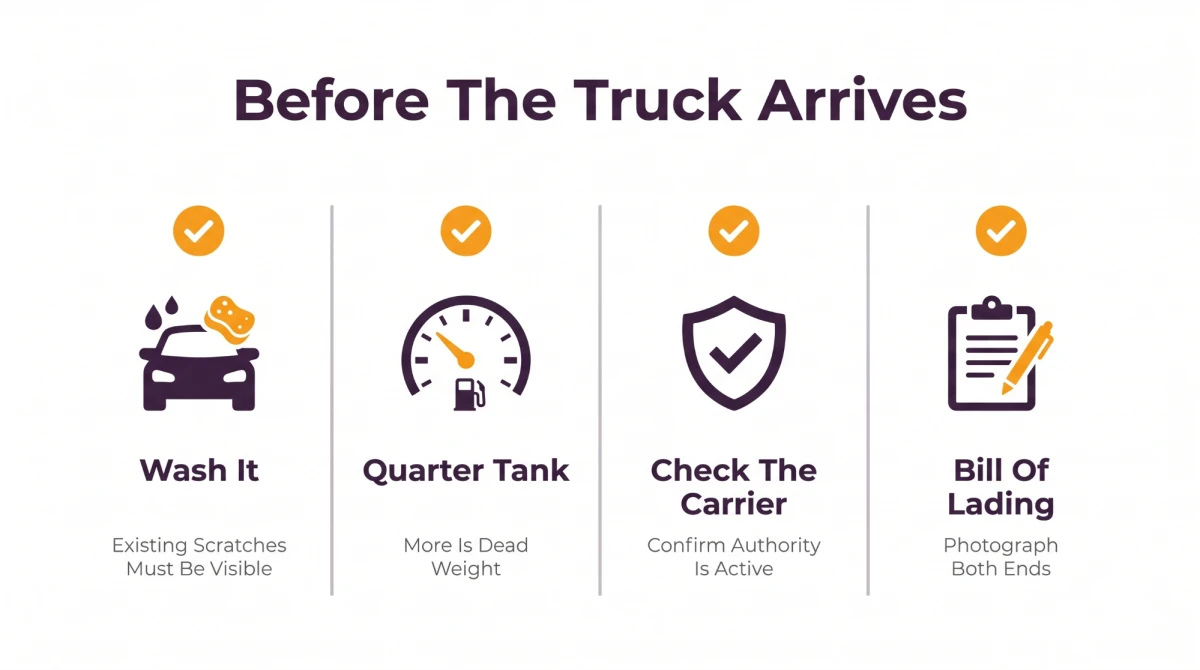
Leave about a quarter tank of fuel. More is dead weight the carrier has to account for, less risks of the car running dry during loading. Fold the mirrors, remove or lower any antenna, and take off roof racks and spoilers that could catch. Disable the alarm, or leave clear instructions, because a car alarm going off repeatedly on a trailer at 3 a.m. is a problem the driver will remember.
Personal belongings are the common mistake. A small amount in the trunk is usually tolerated, but it is not covered by cargo insurance and it adds weight the driver has to account for. Do not treat the car as a shipping container.
When Shipping Is the Wrong Call
Under roughly 500 miles, driving usually wins. The per mile rate is at its highest on short runs, the drive is one long day, and coordinating a pickup window costs more hassle than the journey.
It is also the wrong call when the car is worth less than about twice what moving it costs. A tired second car that needs work on arrival is often better sold before the move and replaced at the other end.
And if the drive is something you actually want to do — a genuine road trip rather than two thousand miles of interstate you have no interest in — then drive it. Shipping earns its money on distance, on second vehicles, and on cars you would rather not add three thousand miles of wear to.
Get three quotes, ignore the cheapest one unless the company can explain why it is low, and check the carrier's record before the car is loaded. Almost everything that goes wrong in this business is prevented in those two steps.
Comments 0
Share your thoughts with other readers. Let us keep the discussion respectful.