
- Tassadaq
- Nov 03, 2026
- Buying Guides
When purchasing a used car in Pakistan, one can face risks if not acquainted with the real history of the vehicle. What may appear to be a clean car on the outside can have issues like a compromised chassis number, inaccurate registration information, or hidden accident damage.
One way to minimize these risks is to check the car's chassis number before purchasing it. This helps identify the vehicle and is used to compare the vehicle's physical information with the official vehicle registration information.
But, there is one important point to be noted: you can't get a complete vehicle history just by typing a chassis number into any government website. The types of verification available vary from province to province. The registration number and documents might be required to verify its registration status.
Here is how to check a car history in Pakistan and what to check before paying for the car.
What Is a Car Chassis Number?
Chassis numbers are unique numbers assigned by the manufacturer for a particular vehicle. It will typically be stamped into the vehicle's body or chassis and can be found on the vehicle's registration papers.
Today's vehicles have a 17-digit Vehicle Identification Number (VIN). Other vehicles and models may be in a different format.
The chassis number will help identify the specific vehicle even if the registration plate changes. When verifying registration records, examining for possible tampering, and verifying the car to documentation.
How to Check a Car’s History by Chassis Number in Pakistan
These are the steps you can take to check if a used car is for sale.
1. Find the Chassis Number
To get the chassis number on the car, first find the number of the vehicle's chassis. It can be stamped in the engine bay, on the body next to the front seats, or in another location as determined by the manufacturer.
It can also be found in the registration book, smart card or other documents on the car.
Make sure the number is clearly visible. Check for grinding, new paint, broken stamping, welding or unusual stamp marks near the stamped area. The above signs are not conclusive of fraud, but should be assessed by a professional.
2. Check the Official Excise Record
There is no single public database in Pakistan that can give a complete history of all the cars running on its chassis with just its chassis number. Registration of vehicles is normally handled by the provincial/regional Excise and Taxation departments.
If the car is registered under the Punjab registration plates then log on to the official Punjab Excise website and activate the online verification service. Depending on its current requirements, the verification form might ask for the number of registration and/or the date of registration.
If your car is registered in another country, please use the appropriate official website:
-
Punjab: Punjab Excise and Taxation
-
Sindh: Sindh Excise and Taxation
-
Khyber Pakhtunkhwa: KP Excise and Taxation
-
Islamabad: Islamabad Excise
Input the information requested and look at the vehicle record available. If there is no chassis-number search capability online, check registration information and contact your appropriate Excise office for advice.
3. Match the Chassis Number With the Documents
With the official record in hand, match up the chassis number in the available record with the one stamped on the vehicle.
Look at the engine number, make, model, registration information and any other information you can get from the car with the paperwork.
Any slight mismatch should be addressed. This may be due to a documentation error, or it may be a more serious issue. Wait until the discrepancy is explained and confirmed by the appropriate party before making a purchase.
4. Check the Car’s Registration and Tax Status
Vehicle registration information can be used to verify the information in the official vehicle registration database. You can view its registration status, registered owner, engine number and token tax details depending on the province and information available.
Remember that an official registration check will not display all previous owners, accident history, repairs, insurance claims or mechanical problems.
If there is a discrepancy between the information provided by the seller and the official record, seek clarification and check the documents prior to paying any advance.
5. Ask the Excise Department About Suspicious Records
If there's any suspicion that the car might be stolen or not registered properly, or if the chassis number is altered, contact the relevant Excise department
It could be necessary to drop off the registration papers and vehicle at its office for additional verification. When you have reason to suspect that theft or criminal tampering has occurred, also contact the police of the relevant jurisdiction for advice.
When there are important numbers that do not correspond with a seller's words, be careful not to trust them.
What Can a Chassis Number Tell You About a Car?
The chassis number can be helpful for identifying the vehicle, but it doesn't provide all the details of the vehicle's history.
|
Information |
Can a chassis number help? |
|
Vehicle identity |
Yes, when checked against reliable records |
|
Engine and registration details |
Can help when matched with official records |
|
Registration status |
Usually checked through the relevant Excise portal |
|
Previous ownership |
Depends on the records available |
|
Accident history |
Not necessarily; additional checks are needed |
|
Odometer rollback |
Cannot be confirmed from the chassis number alone |
|
Mechanical condition |
Requires a physical inspection |
|
Chassis tampering |
Requires careful physical examination and, if necessary, official verification |
Having a clean registration history does not mean that the car has never been damaged or repaired. A physical inspection should be used in conjunction with a document verification before deciding.
How to Identify a Tampered Chassis Number
Possibility of chassis-number tampering can be hard to detect without experience. But, there are warning signs that you should not overlook.
Search for the following:
-
Displays of characters that are not uniform or steady.
-
Scratches, grinding marks or new paint in the stamping area.
-
Welding/Repair marks near the identification area.
-
Chassis number that is not registered in the documents.
-
Failure to have identification plates or damaged identification plates.
-
A seller who is unwilling to allow you to check the quantity.
Do not attempt to change, retype or repair a questionable identification number. Have it checked by a qualified person or the appropriate authority.
Is Checking a Car’s History Online Enough?
While online verification is a crucial early step, it has its limitations.
The government portals are mainly used for the verification of registration data. They might not register all the accidents, flood damage, engine issues, structural repairs, and even odometer tampering.
For instance, a vehicle can be registered but still have a repaired chassis, broken suspension or be involved in some serious accidents. Some of these problems may not be evident on the computer.
Before purchasing a second-hand car, there are three checks that you should perform:
-
Document verification: Ensure that the information in the document is correct.
-
Inspect physical condition: Check body, chassis, engine, suspension, electrical systems, etc.
-
Ownership and legal verification: Ensure the seller has the right to sell the vehicle, and verify transfer requirements.
By doing so you can prevent yourself from paying unnecessary repair bills and from purchasing a car that has lots of issues.
Common Mistakes to Avoid When Checking a Car’s History
Many customers just look at the car's looks, mileage and price. But when it's not identified, there can be expensive errors.
Try to avoid these mistakes:
-
Searching just the registration number: Also verify the chassis and engine numbers, and the vehicle's documentation.
-
Avoid relying on screenshots, and verify the content of the official portal yourself.
-
Clean record does not mean clean car: verification on registration does not supersede a physical inspection.
-
Assuming the numbers will be the same: If one of the numbers in an ID number is wrong, it requires an explanation.
-
Paying before record verification: Make no final payment until record, vehicle condition and ownership documents have been verified.
-
Without professional inspection: Structural damage or mechanical problems might not be apparent in a limited test drive.
Buy With More Confidence Through SpotMV
Although it's a significant step, it's just one of the many necessary steps to take when buying a used car safely. It is important to be familiar with the physical condition of the vehicle before you determine what the asking price should be.
The car inspection service is another feature offered by SpotMV that enables buyers to make informed decisions. The team checks out the car, and then gives a detailed explanation about the situation, which you can view on a video, with the explanation of the obvious problems and potential warning conditions that might require further investigation. The findings can be read by the purchaser and questions asked, rather than only by the seller.
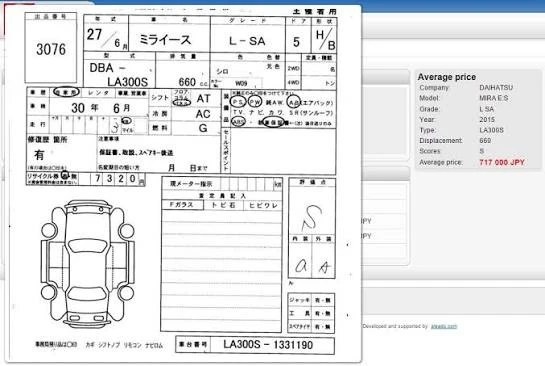
SpotMV also provides access to car listings, as well as a real-time car auction sheet format, providing information on the inspection reports, which will help buyers make informed decisions about which car they want to buy.
Before purchasing a used car in Pakistan, check the official documents of the vehicle, compare the chassis number, and have it professionally inspected. The following checks can help you save money and help you to make a better decision when selecting a car to purchase.
Frequently Asked Questions
1.Is it possible to find out the complete history of a car through the chassis number in Pakistan?
Not always. A chassis number can be used to identify a vehicle but not every government-controlled portal will be able to give you a full history using only the chassis. The registration number, vehicle documents or help from the appropriate Excise department may be required.
2. Does the chassis-number verification in Pakistan charge anything?
The online vehicle verification services are official and normally free of cost. However, it may cost money to have a physical inspection or detailed private report or even additional verification services.
3. How to check a car in Punjab?
Visit the official website of the Department of Excise and Taxation of the Punjab government. Access its vehicle verification service and adhere to the information it is asking for in the current portal.
4. Does a chassis number show accidents?
No. Chassis number is a vehicle identifier, but it doesn't contain its accident or repair history. Previous damage must be investigated by a physical examination and supporting documentation (if available).
5. What should I do if the chassis number does not match with the documents?
Wait to make the purchase until mismatch is adequately explained and verified. If you are suspicious of tampering, contact the department of Excise and request a professional examination.
6. Is there any way to determine if a car is stolen by using its chassis number?
A chassis number is useful for officials to identify a vehicle but does not prove that it is stolen if you enter it into a public registration site. If you are concerned, please contact the appropriate police service and ask for an official statement.
7. Do I need to have the chassis number checked?
Yes. The document verification does not guarantee the complete mechanical and structural condition of a car. When assessing the condition of the property prior to purchase, a professional inspection can assist in determining areas of damage, faults and possible repair costs.
8. How can SpotMV assist in purchasing a used car?
SpotMV offers car inspection services and gives a detailed video report of the condition of the car. This makes it easier for buyers to know what to expect, have a few questions, and then make an informed decision before buying a used car.
Comments 0
Share your thoughts with other readers. Let us keep the discussion respectful.