

- Tassadaq
- Nov 05, 2026
- Buying Guides
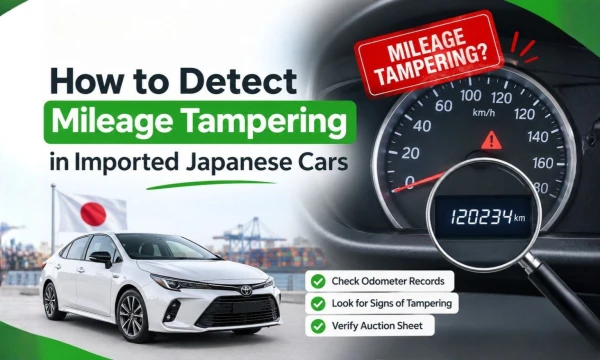
Japanese cars are in demand in Pakistan due to their fuel efficiency, comfort, and advanced features. Before purchasing a used Japanese car, however, you want to make sure that the car's mileage is not fake.
Mileage tampering happens when someone changes a car’s odometer reading to make it appear that the vehicle has travelled fewer kilometres than it actually has. For instance, you could see an advertisement for a car that has 150,000 km and an odometer reading of 65,000 km.
This can help the seller to boast a more attractive car and demand more money. It can also mask up other wear and tear, postpone repairs and cause unscheduled repair expenses.
Fortunately, there are a few warning signs to watch for before purchasing an imported Japanese car in Pakistan. It's important to review the auction sheet, verify the records available, look at the odometer reading and interior, and have a professional inspection.
What Is Mileage Tampering in Japanese Cars?
Mileage tampering occurs when someone alters the distance a vehicle has travelled on the odometer to portray a smaller distance than that the vehicle has actually traveled.
This problem can be encountered by Japanese imported cars purchasers if their cars have been traded several times, auctioned off, exported, or imported. The car could be a true Japanese log, but the odometer could have been tampered with at some time.
For instance, take the Toyota Aqua imported from Japan. It may have been sold 112,000 km and the odometer currently reads 58,000 km. This disparity is an alarming fact that should be explored.
A disparity in records doesn't necessarily mean that it is a fraud, though. It may be a case of a documented odometer replacement or a data entry error. What matters is to understand the reasons behind the differences in the readings before buying the car.
7 Ways to Detect Mileage Tampering in Imported Japanese Cars
Never take a car's mileage on just one of the signs. Rather, check several records and examine the condition of the vehicle.
1. Verify the Japanese Auction Sheet
One of the most important papers to review and understand when looking into the background of a foreign car from Japan is the Japanese auction sheet.
Japanese auctioned vehicles come with an inspection sheet that provides information on the car's condition, mileage, and more. It also may contain the notes on damage or previous repairs, depending on the auction house and document.
See the mileage on the sheet and match it with the existing odometer reading in Pakistan.
For example:
|
Record |
Mileage |
|
Japanese auction sheet |
105,000 km |
|
Current odometer |
62,000 km |
|
Difference |
43,000 km |
This distinction needs to be explored. Request an explanation; check the authenticity of the auction sheet with a trusted source.
Not all documents with the word "auction" on it are auction sheets. A sheet that is copied, modified, or is completely different can be shown to make a car look more trustworthy.
Note: Auction sheets are vital, but not a comprehensive history of a car. If the document is not valid and properly connected to the vehicle, they are unreliable.
2. Check the Auction Sheet’s Chassis Number
The real benefit of a real auction sheet will only be if it is your specific vehicle you intend to purchase.
Check the chassis number (or vehicle identification number on the auction sheet) against the vehicle's identification number and accompanying paperwork. This format may differ depending on the vehicle; please see the appropriate ID number for that vehicle's format.
Do not take the numbers if they don't match, as this is not a validation of the car's mileage.
Also look at the make, model, model year, and other identifying information to see if these match up with the vehicle.
The mismatch could be due to an administrative error, but it might also indicate that the document is from a different car. Discover the difference first before giving a payment in advance.
3. Examine the Odometer and Dashboard
The odometer shows the distance a vehicle has covered. Many Japanese imports have a digital display and some older versions have mechanical displays.
Check for any signs of removal, replacement or repair to the instrument cluster. If there are loose dashboard panels, damaged fasteners, any strange gaps, or inconsistencies in the illumination, then it may be worth further investigating.
But these are not conclusive evidence of mileage tampering. The instrument panel may be replaced for a valid reason.
The digital odometer can also be manipulated without any discernable external damage. So a clean looking dash doesn't necessarily mean that mileage is correct.
Ask for any paperwork that proves the odometer or instrument panel has been replaced and have the car inspected by a mechanic who has experience working with these types of vehicles.
4. Compare the Mileage With Interior Wear
There are several indicators that can be found inside the car that show how much the vehicle has been used.
Check the condition of the following parts:
-
Steering wheel: Check for excessive smoothing, peeling or worn surfaces.
-
Inside driver seat: Look for crushed cushioning, rips or cracks in the fabric or leather.
-
Check Accelerator, Brake and Clutch pedals (if applicable) for excessive wear.
-
Inspect gear for signs of wear, looseness or damage to surfaces with a gear selector.
-
Door handles and switches: Ensure buttons do not become faded, worn or used excessively.
-
Seat belts: Check for damage or unusual wear in or around the seat belt and belt mechanism.
If the car has just 35,000 km, but the driver's seat, steering wheel and pedals have a lot of wear and tear, you need to do more investigating.
However, interior wear does not always mean it is worn. A vehicle that is driven heavily in urban areas can be more worn than a vehicle that is driven primarily on the freeways. Interiors may also have been refurbished or replaced in some instances.
The ideal solution is to look at the interior's condition when compared to the shown mileage and history of the car.
5. Check Japanese Service and Maintenance Records
Records of maintenance are evidence of the change in a car's mileage over time.
If the seller has Japanese service records, inspection records or maintenance invoices, examine the dates and odometers.
For instance, in the records one might read:
|
Record date |
Recorded mileage |
|
March 2022 |
48,000 km |
|
November 2023 |
71,000 km |
|
Current reading |
52,000 km |
This is an example where the current odometer reading is less than a previous documented reading. This is a big problem that should be addressed.
Search for a steady increase in the reading. If records are missing, inquire if there are any other records.
Remember that all foreign cars are not complete record. For instance, even if there are missing records, it doesn't necessarily mean that the mileage has been changed, but it does make verification more difficult.
6. Get the Car Scanned With Diagnostic Equipment
A professional diagnostic scan might be able to help you uncover any inconsistencies in a vehicle's electronic systems.
Some control modules can contain information about mileage, operating data or fault. A technician can perform a test to see if the available data matches the odometer reading displayed.
But not all cars record their mileage in more than one module and not all scans are able to identify mileage tampering. Other modules might not contain data applicable to this project, or the data in them might have been replaced or modified.
In addition to the above, the inspection of hybrid Japanese cars includes the hybrid system, hybrid battery condition, and hybrid fault codes. The following checks can help determine the condition of the vehicle, but they are not sufficient to determine the validity of the odometer reading.
Don't just rely on a simple scan; a technician with experience in the specific vehicle should do it.
7. Check the Car’s Overall Mechanical Condition
You can use the condition of a vehicle to help determine if the mileage is published in a reasonable manner.
Listen for any engine, transmission, suspension, steering, brake, tyre or other major component issues. Inquire with the inspector about excessive usage, maintenance issues, past repairs, and future repair costs.
For instance, even a car with 40,000 km on it can still suffer from suspension issues stemming from the use of poor and rough roads. Similarly, a vehicle that has 100,000 km on the clock and is well maintained could be better than a vehicle that has 50,000 km and has not been maintained.
The distance travelled cannot be determined from mechanical wear. It can assist you with making an informed decision along with the auction sheets, service records, and diagnostic.
How to Check Mileage Before Buying a Japanese Import in Pakistan
If you are considering a Japanese import in Pakistan, follow this checklist before finalising the purchase.
|
What to check |
Why it matters |
|
Current odometer reading |
Establishes the mileage being advertised |
|
Original auction sheet |
Helps compare the Japanese auction mileage |
|
Chassis number or VIN |
Confirms that the records belong to the same car |
|
Service and maintenance records |
Shows how mileage changed over time |
|
Interior and mechanical condition |
Helps identify signs of heavy use or neglect |
|
Diagnostic scan |
May reveal relevant inconsistencies or stored data |
|
Import and registration documents |
Helps verify the vehicle’s identity and available history |
|
Professional inspection |
Combines document checks with a physical assessment |
Avoid rushing through the process as it may appear that the car is clean, or the owner says that it has a low mileage. Request some time to check documents and inspect the car.
If the seller is unwilling to make reasonable testing or is unable to give a good explanation for the large difference request a walk away.
Does a Low-Mileage Japanese Car Always Mean a Better Deal?
No. Low mileage is just one of the factors to consider when looking at a used car.
A car of 45,000 km can be poorly maintained, crash involved or sitting idle for extended periods of time. On the other hand, a car that has 90,000 km on the clock can have a great service record and be in excellent mechanical shape.
Other factors to consider are the year of the car, maintenance, accident history, availability of parts and the estimated repair cost.
Mileage is important to consider because they will be an indicator of the use, but it should not be used as the only reason.
Don't assume that the lower the reading, the more you should pay for a car just because of those numbers, but rather ask to see the records and determine if the car's condition is worth the price.
What Should You Do if You Suspect Mileage Tampering?
If there is an unexplained discrepancy on the auction sheet, service history or the odometer, or the diagnostic results, follow the following steps:
-
Request the original documents and an explanation from the seller.
-
Check that the auction sheet is for the same vehicle.
-
Check chassis number and other identification features.
-
Schedule a professional inspection and diagnostic check up.
-
Don't pay the total amount until the matter is investigated.
Check and see if the seller can provide proof of the original replacement where there is a replacement, and if there was previous mileage, that is properly documented.
If there is no explanation of the discrepancy, don't assume that the advertised mileage is accurate. Negotiation is possible only if you are aware of the risk; but if possible, it is better to walk away.
Buy a Japanese Import With More Confidence Through SpotMV
While checking mileage is one of the key factors to consider when purchasing an imported Japanese car, this should not be the only factor. If your car or truck shows a true odometer reading, it doesn't mean that it's accident free, has no mechanical issues, or even requires no costly repairs.
SpotMV's professional inspection service aids the buyers in analyzing used cars. The inspection team inspects the vehicle and gives a detailed video report indicating the condition of the vehicle and any issues that may require attention.
This provides a chance to see the results and get some questions answered, and to determine if they want to move forward. SpotMV also assists buyers by providing reports on their car listings, and the live car auctions process so that they can better understand the condition of the vehicle in their bidding.
When purchasing a Japanese import in Pakistan, check the auction sheet, compare the chassis number, check the available service records and get it checked by experts before finalizing the deal.
By taking the time to do a bit more due diligence, you can save yourself the extra expense of buying an unverified low-mileage vehicle and make a well-informed car purchase.
Frequently Asked Questions
How to find the correct mileage of a Japanese imported vehicle?
Check the current mileage against the original bid sheet, service records and any inspection records. Depending on the vehicle, a professional diagnostic check could also help to detect inconsistencies.
Is it possible for a Japanese auction sheet to establish the reliability of mileage?
A true auction sheet may be helpful to demonstrate the mileage of the vehicle when it was auctioned. But it does not mean the odometer reading wasn't tampered with prior to or after the inspection.
Is it possible to tamper with digital odometers on Japanese cars?
Yes. Digital odometers are easily tampered with electronically. If no damage to the dashboard can be seen, the reading does not necessarily reflect a true reading.
Will the chassis number indicate the original mileage of a car?
No. Chassis number: Identifies the vehicle. Will not display all the miles on its own. The supporting records and other checks are required.
What if the auction sheet and odometer show different readings?
No, you also need to be aware of the maintenance record, accident damage, mechanical condition and replacement parts. It's possible that a car with a high mileage and is in good condition is a better deal than a car that has a low mileage but is in poor condition.
What if the auction sheet and odometer show different readings?
Ask the seller for an explanation and verify the auction sheet’s authenticity. Some differences may be due to a documented replacement of the odometer or clerical error; if there is an unexplainable discrepancy, it may be a red flag.
Can a mechanic detect mileage tampering?
Consistencies can be found during a physical exam, diagnostic scan and by checking records by a qualified mechanic. But none of the one inspection technique will ensure that every vehicle can be detected.
Is there any inspection for Japanese cars at SpotMV?
SpotMV provides used-car inspection to provide customers with a detailed video report about a car's condition. Discuss with the team what inspection is available for that specific Japanese import.
Comments 0
Share your thoughts with other readers. Let us keep the discussion respectful.